

 AED Defibrillators
 Cases and Cabinets
 Soft Pack Kits
 Marine Kits
 Car Safety Kits
 Fire Blankets
 Heavy Duty Vehicle Brackets
 Manifest Cabinet and SDS Holders
 PPE
PPE Safety Signs and Tags





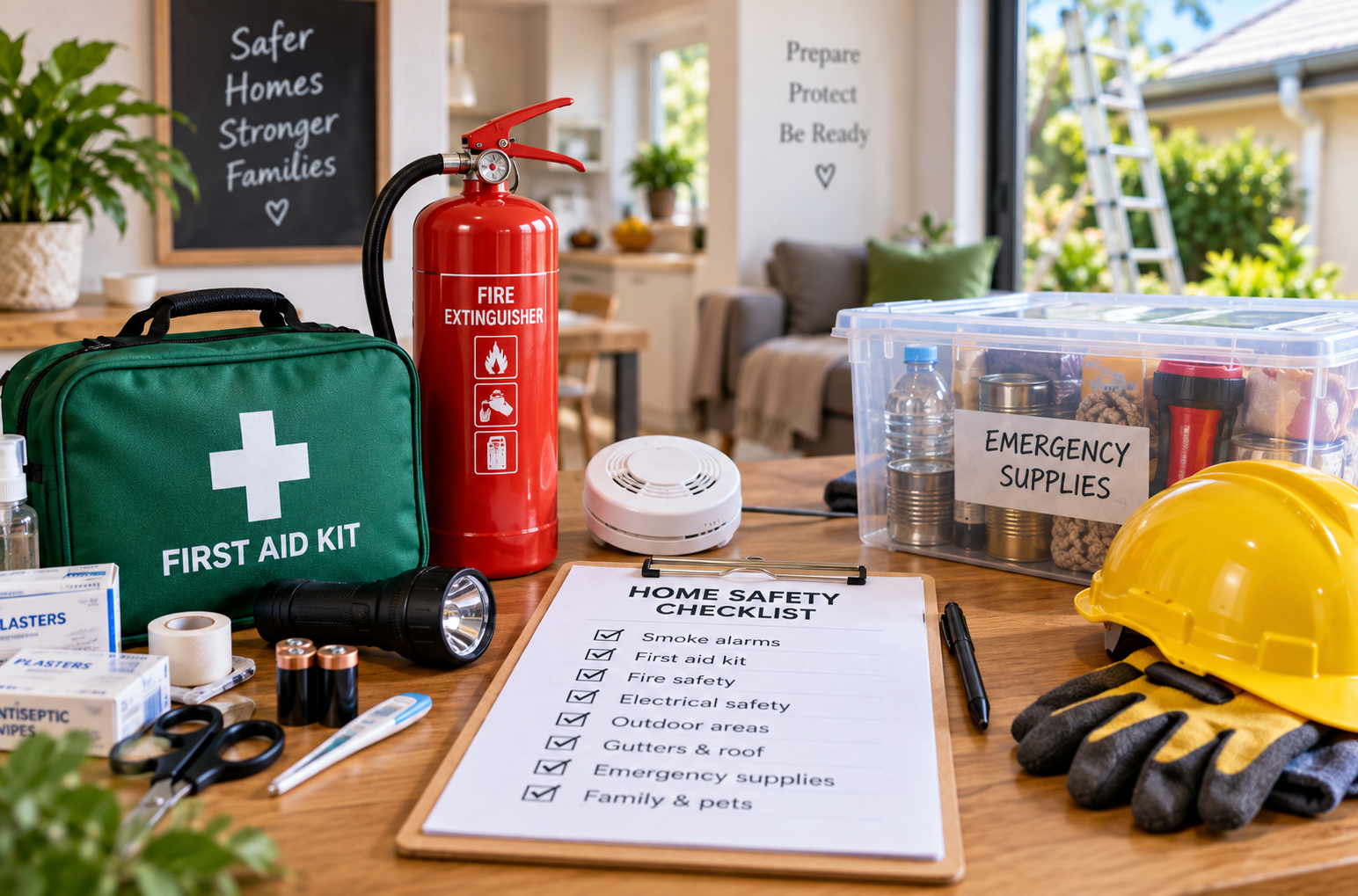
A safe home is not just about locks and smoke alarms. Everyday household risks can come from electrical equipment, fire hazards, falls, power outages, gardening equipment, chemicals and even poorly stored emergency supplies.
A simple home safety review once or twice a year can help identify problems before they become emergencies.
Check your smoke alarms
Smoke alarms are one of the most important safety devices in any home.
Check that alarms are installed in appropriate locations, test them regularly and replace batteries or units when required. If you move into a new home, make checking the smoke alarms one of your first jobs.
Keep a first aid kit easy to access
Every household should have a properly stocked first aid kit in a location that family members can find quickly.
Useful items may include:
- Adhesive and sterile dressings
- Bandages
- Disposable gloves
- Antiseptic products
- Saline
- Scissors and tweezers
- Basic first aid instructions
Check expiry dates periodically and replace any products that have been used.
Review fire risks around the home
Kitchens, garages, sheds and outdoor entertaining areas can all contain potential fire hazards.
Keep combustible materials away from heat sources and avoid overloading electrical power boards or extension leads.
Fire extinguishers and fire blankets should be appropriate for their intended use and positioned somewhere accessible rather than hidden behind stored items.
Store household chemicals safely
Cleaning products, pool chemicals, pesticides and gardening products should be stored according to the manufacturer’s instructions.
Keep hazardous products away from children and pets and never transfer chemicals into food or drink containers.
Clearly labelled storage also helps prevent accidental misuse.
Check outdoor areas for hazards
Backyards and gardens can create their own safety risks, particularly where tools, ladders, power equipment or chemicals are stored.
Check:
- Garden tools are stored securely
- Ladders are stable and undamaged
- Outdoor electrical leads are appropriate for outdoor use
- Paths and steps are free from trip hazards
- Pool and spa areas are properly secured where applicable
- Outdoor furniture and storage units are stable
Keep gutters and roof areas maintained
Leaves, branches and other debris can collect in gutters, particularly around homes with established trees.
Regular inspection and maintenance can help reduce blocked drainage, water overflow and the build-up of dry combustible material around the roofline.
For a more detailed seasonal maintenance guide, Home & Gardening Australia has a practical roof and gutter maintenance checklist for Australian homes covering inspections, cleaning, drainage, roof checks and ongoing upkeep.
Prepare for power outages
Power outages can happen because of storms, network faults, bushfire conditions or other unexpected events.
Useful supplies to keep on hand include:
- Torches
- Spare batteries
- Charged power banks
- Drinking water
- Essential medication
- Basic non-perishable food
- Emergency contact information
Keep these items together so they can be located easily in the dark.
Make electrical safety part of your routine
Damaged plugs, power cords and electrical appliances should not be ignored.
Stop using equipment that appears damaged, overheats, sparks or behaves unusually and have it checked or replaced as appropriate.
Extension leads should also be used carefully and should not become a permanent substitute for properly installed power points.
Think about children, older people and pets
Home safety needs can change depending on who lives in the property.
Families with young children may need additional locks, cupboard protection and secure storage for medicines or chemicals.
Older household members may benefit from improved lighting, clear walkways, handrails and reduced trip hazards.
Pet owners should also keep medicines, chemicals, sharp tools and potentially harmful products out of reach.
Know where your emergency information is
Important contact information should be easy to locate during an emergency.
Consider keeping a list containing:
- 000 for emergency services
- Family emergency contacts
- Relevant medical information
- Insurance details
- Utility provider contact numbers
- Emergency accommodation contacts where appropriate
Review home safety regularly
Home safety is not a one-time task.
A quick review every six to twelve months can identify expired first aid supplies, damaged equipment, blocked access points and other problems that are easy to overlook during everyday life.
The bottom line
Most home safety improvements are simple and inexpensive. Regular checks, sensible storage and having basic emergency equipment readily available can make a significant difference when something unexpected happens.
All Safety Products supplies a wide range of workplace, first aid, emergency and safety products for Australian homes and businesses.